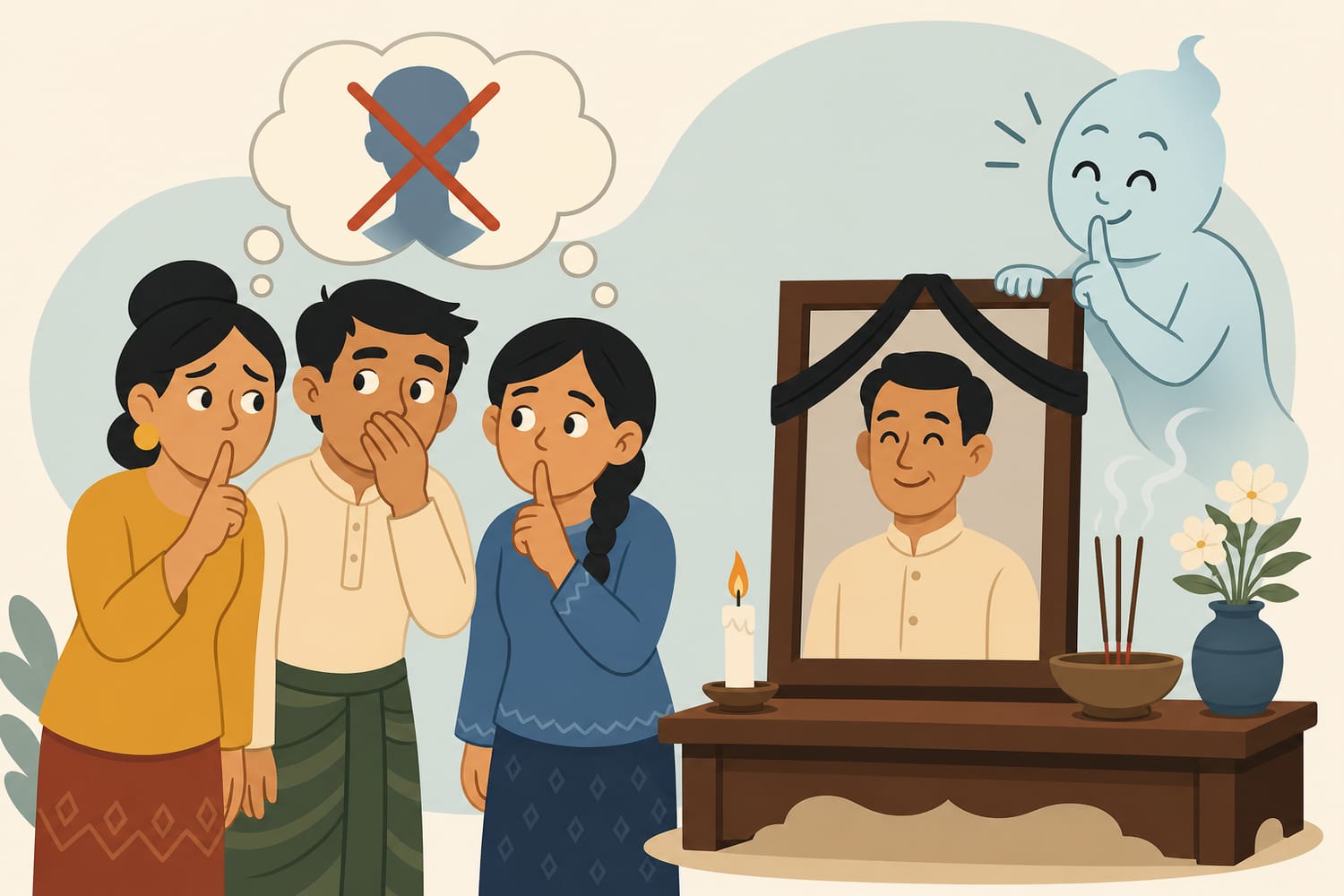
A Name Is More Than a Label
In many parts of the world, saying someone’s name after they die is perfectly normal. Obituaries print it. Gravestones carve it. Families repeat it often, sometimes as a way of keeping the person close: “Your grandmother loved this song,” or “That was just like Uncle Joe.”
But in other cultures, the opposite can be true. After a person dies, their name may become difficult, improper, or even forbidden to say—sometimes for days, sometimes for years, and sometimes permanently.
At first, this can sound surprising. Isn’t saying a name how we remember someone? For many cultures, yes. But for others, not saying the name is the respectful act. It may protect the grieving family, help the spirit move on, or recognize that a name is not merely a convenient tag but a powerful part of a person’s identity.
In short: names can carry emotional, spiritual, and social weight. In some communities, after death, that weight becomes too heavy to toss around casually.
The Name as a Living Part of the Person
Modern English speakers often treat names like labels on folders. Useful? Yes. Sacred? Usually not. If two people named Sarah are in the same room, we add a surname, nickname, or job title and move on with our lives.
But many cultures have viewed personal names as much more closely tied to the person. A name may be connected to ancestry, land, spiritual power, family relationships, or life stages. In some traditions, names are not freely shared with strangers. In others, people receive new names after initiation, marriage, parenthood, or death.
This helps explain why a name might become sensitive when someone dies. If the name is thought to remain connected to the person’s spirit, saying it aloud may feel like summoning them, disturbing them, or pulling mourners back into fresh grief. Even when the belief is not described in supernatural terms, the social effect is easy to understand: hearing the name of someone newly dead can hurt.
So, instead of using the name, people may say “the late one,” “your mother,” “that old man,” “our sister,” or a special substitute word. These phrases do the job of referring without reopening the wound too sharply.
Aboriginal Australian Mourning Practices
Some of the best-known examples of avoiding the names of the dead come from Aboriginal Australian cultures. It is important to say “cultures” in the plural: Aboriginal and Torres Strait Islander peoples are not one single group, but many peoples with distinct languages, laws, and traditions.
Still, in many Aboriginal communities, there are protocols around not speaking the name of a person who has died. This is often part of what is commonly called “Sorry Business,” a broad term referring to mourning practices, funerals, obligations to family, and community ways of grieving.
In some communities, the deceased person’s name is avoided for a set mourning period. In others, avoidance may last much longer. Photographs, video, and audio recordings of the person may also be restricted. This is why Australian museums, broadcasters, universities, and websites often include warnings such as: “This material may contain images, voices, or names of deceased Aboriginal and Torres Strait Islander people.”
Those warnings are not empty formalities. They are attempts to respect real cultural protocols. For some viewers, unexpectedly seeing or hearing a deceased relative can be deeply distressing or culturally inappropriate.
Different language groups have developed special words to avoid saying the name directly. In some Central Australian communities, substitute terms such as Kumanjayi or Kunmanara may be used in place of the name of someone who has died, though the exact usage varies by language and community. These words allow people to refer to the person without breaking the taboo.
Imagine if, instead of saying “Margaret,” everyone temporarily agreed to say “the dear one” or a specific respectful placeholder. It is not that Margaret has been forgotten. Quite the opposite: the whole community is adjusting its speech because her death matters.
When a Name Taboo Changes the Language
Here is where things get especially interesting for language lovers: in some societies, death-related name taboos can affect not only personal names but ordinary words.
Why? Because personal names often come from everyday vocabulary. A person might be named after an animal, plant, place, weather event, ancestor, or meaningful object. If someone’s name sounds like a common word, the common word itself may become uncomfortable or forbidden to say for a while.
In parts of Australia, linguists have observed that words resembling the name of a recently deceased person may be avoided and replaced. Over time, this can contribute to vocabulary change. A community may borrow a word from a neighboring language, revive an older term, use a descriptive phrase, or create a substitute.
To English speakers, this might sound like linguistic chaos. Suppose someone named Rose died, and suddenly everyone avoided not only “Rose” but also “rose” as a flower and “rose” as the past tense of “rise.” “The tulip’s prickly cousin bloomed,” perhaps? “Yesterday the sun… got up?” It would be a lot.
But languages are remarkably flexible. Humans are expert at finding another way to say things. Taboo, politeness, humor, religion, politics, and fashion all shape vocabulary. Death-name avoidance is one more force in the grand, messy, fascinating engine of language change.
Similar Traditions Around the World
Name avoidance after death is not unique to Australia. Versions of it have appeared in many places, though the meanings and rules differ.
Among some Native American communities, including certain Diné, or Navajo, traditions, speaking too directly about the dead has often been discouraged. Practices vary widely among families and communities, but the concern may involve respect, emotional restraint, and beliefs about spirits or lingering presence. In some cases, names of the dead are avoided especially during the immediate mourning period.
Historical Chinese culture offers another kind of name avoidance: the naming taboo, known as bìhuì. People were expected to avoid using the personal names of emperors, ancestors, and sometimes other revered figures. This could apply to writing as well as speech. Characters might be altered, replaced, or omitted to avoid disrespect. Place names and official terms could even change because they contained a character from an emperor’s personal name.
This was not always about death in the same way as mourning taboos, but it shows a related idea: a personal name can be too important to use casually. The name of a parent, ancestor, or ruler carried such status that ordinary speech had to bend around it.
In other cultures, the pattern goes the other way. Some communities make a point of speaking the dead person’s name often, naming children after deceased relatives, or invoking ancestors in prayer and ceremony. This contrast is useful. It reminds us that there is no universal human rule for grief. Some people remember by saying the name. Others remember by protecting it with silence.
Silence Is Not the Same as Forgetting
To outsiders, avoiding a dead person’s name can look like erasure. If no one says the name, are they being removed from memory?
Usually, no. In many of these traditions, the person remains very much remembered. Their relationships, stories, responsibilities, and place in the family continue. People may talk about them through kinship terms, respectful substitutes, or indirect references. The silence around the personal name is not a blank space; it is a marked space.
Think of a moment of silence at a memorial. Nobody assumes the silence means “we have nothing to say.” The silence itself says something: this matters. We are pausing because ordinary speech is not enough.
Name avoidance can work similarly. It creates a special zone around the dead. The community changes its everyday behavior to acknowledge that someone has crossed a boundary.
The Practical Side of Not Saying a Name
These customs also have a practical emotional function. Grief is not only private; it is social. Families need ways to signal what is painful, what is respectful, and how others should behave.
A name taboo gives the community a clear rule. Don’t casually say the name. Don’t broadcast the person’s image. Don’t make mourning harder by accident. Use the accepted substitute. Follow the family’s lead.
In a world where people are often unsure what to say after death, there is something powerful about having a shared script. It may seem restrictive, but it can also be protective.
Of course, the details matter. Some families may want the name spoken. Others may not. Traditions can change over time, and individuals within the same culture may have different preferences. The most respectful approach is usually simple: ask, listen, and do not assume.
The Digital Age Complicates Everything
Name avoidance becomes trickier in the age of search engines, social media, and permanent archives.
A person’s name may appear in old Facebook posts, tagged photos, newspaper articles, school websites, genealogy databases, and video captions. Even if a family or community observes a mourning taboo, the internet may keep cheerfully blurting out the name like an awkward guest at a funeral.
This is one reason cultural warnings and content notices are important. They give people a choice before encountering sensitive material. Museums and archives may also consult communities about how to label, restrict, or present records involving deceased people.
Digital culture often assumes that more access is always better. But name taboos remind us that information can be personal, relational, and sacred. Just because something can be displayed does not always mean it should be displayed without care.
What These Traditions Teach Us About Language
The custom of not saying a dead person’s name reveals something beautiful about language: words are never just words.
They live in families, ceremonies, histories, and hearts. A name can be a greeting, a memory, a wound, a blessing, or a bridge to ancestors. When a culture chooses not to say a name after death, it is not being strange or irrational. It is using language carefully at a moment when care matters most.
For some, remembrance sounds like speaking the name aloud. For others, remembrance sounds like silence, substitution, or a respectful pause.
Either way, the deeper message is the same: the dead are not treated like ordinary topics. They change the room. Sometimes, they even change the dictionary.