“Assure” vs. “Ensure” vs. “Insure”: The Simple Rule That Keeps Them Straight
The 10-Second Answer
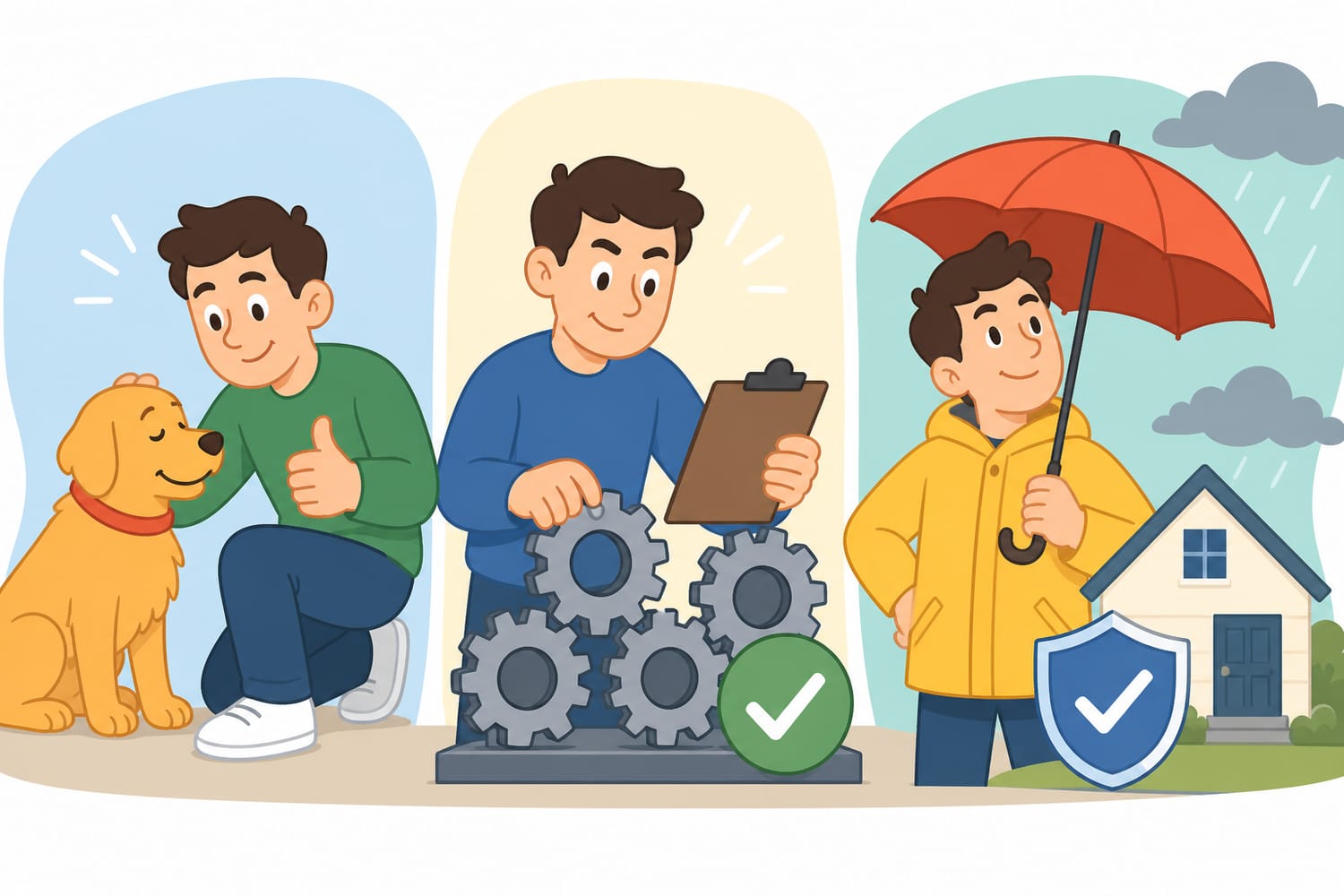
Use assure when giving someone confidence, ensure when making an outcome certain, and insure when protecting against financial loss. In short: assure people, ensure results, insure property. If you remember one sentence, make it this: “I assure you that I’ll ensure the house is insured.”
Three Similar Words, Three Different Jobs
Assure, ensure, and insure look as though someone copied the same word three times and changed the first letter. They sound similar, too—especially in quick conversation.
Fortunately, you do not need to study a complicated grammar chart to tell them apart. For clear modern writing, give each word one main job:
| Word | Main meaning | Think of… | |---|---|---| | Assure | Give someone confidence | A worried person | | Ensure | Make something certain | An event or result | | Insure | Protect financially | An insurance policy |
Here they are working together:
The agent assured us that the alarm would ensure the building remained secure and might make it cheaper to insure.
One person is comforted, one result is made more likely, and one building receives financial protection. Everyone is busy, but nobody is doing anyone else’s job.
When to Use “Assure”
To assure someone is to speak confidently in order to remove doubt, worry, or uncertainty.
I assure you that the meeting will be brief.
The doctor assured Maya that the procedure was routine.
He assured his parents that he had remembered his passport.
Notice that assure usually has a person—or a group of people—as its object. You assure me, her, the customers, or your nervous relatives.
A useful test is to ask whether reassure would express a similar idea:
She reassured the children that the noise was only thunder.
If reassure fits, assure probably does too. The two words are not identical in every situation, but both can involve giving someone confidence.
The “A” Memory Trick
Think of the a in assure as standing for anxiety:
You assure someone whose anxiety needs calming.
Alternatively, imagine the word beginning with “Ahhh”—the sound a person makes after receiving some comforting news.
Just remember that an assurance is a confident statement, not necessarily a guarantee backed by action. Your friend may assure you that he knows a shortcut. Whether that shortcut ends at the restaurant or in an abandoned parking lot is another matter.
When to Use “Ensure”
To ensure something is to make certain that it happens or is true. The focus is on an action, condition, event, or result—not on calming a person.
Please check the address to ensure that the package reaches the right house.
Regular backups help ensure that important files are not lost.
The organizers added more chairs to ensure that everyone had a seat.
You can often replace ensure with make sure:
Please check the address to make sure the package reaches the right house.
That substitution is one of the easiest ways to confirm your choice. Microsoft’s editorial guidance similarly recommends using ensure to mean “make sure” or “guarantee”.
“Ensure” Does More Than Promise
The difference between assure and ensure becomes especially clear when words and actions point in different directions:
Liam assured us that there would be enough pizza.
Liam said there would be enough. We may feel better, but the pizza has not multiplied.
Liam ordered six additional pizzas to ensure that there would be enough.
Now Liam has taken practical action. This is leadership—or an excellent excuse to order six pizzas.
The same distinction appears in workplace writing:
The manager assured employees that the problem would be fixed.
The manager hired another technician to ensure that the problem was fixed.
The first sentence describes a confident statement. The second describes a step intended to produce a result.
English has plenty of tiny distinctions like this. If you enjoy quick substitution tricks, the same approach can help with “awhile” versus “a while”.
When to Use “Insure”
To insure a person or possession is to arrange financial protection against loss, damage, injury, or another covered risk.
We need to insure the new car before driving it.
The gallery insured the painting before transporting it.
Some companies will not insure a vacant building.
This is the easiest word of the three to remember because insure is hiding in plain sight inside insurance. If policies, premiums, claims, coverage, or financial risk are involved, insure is usually the word you want.
You can insure:
- a car
- a home
- a business
- a valuable object
- a person’s life
- yourself against certain risks
The American Heritage Dictionary’s usage note observes that although ensure and insure can overlap in some general contexts, insure is the standard American English choice for commercial protection against risk.
Compare these two sentences:
Locking the doors helps ensure the store is secure.
The owner insured the store against theft.
The lock is intended to produce security. The policy provides financial protection if security fails.
Why the Confusion Is Understandable
Writers did not invent this confusion through carelessness. The words are historically related and ultimately share a root connected with being safe or secure. Insure also developed as a spelling variant of ensure, and the two words were used interchangeably for centuries.
That overlap has not disappeared completely. Some dictionaries still recognize insure as meaning “make certain,” particularly in American English:
Careful planning will insure success.
That use is not necessarily incorrect. However, many modern editors prefer ensure in sentences like this because it creates a clear, useful distinction:
Careful planning will ensure success.
Saving insure for insurance-related meanings makes your sentence immediately understandable to readers in different regions. It also prevents them from briefly wondering whether success has somehow taken out a policy.
Language is full of cases in which history permits more than one choice, while modern usage favors the clearest one. That is why you cannot always trust your ear with English grammar.
Common Mistakes and Quick Fixes
Mistake: Ensuring a Person
The guide ensured us that the trail was safe.
Unless the guide packed everyone into a crate labeled “Guaranteed Hikers,” this should be:
The guide assured us that the trail was safe.
The guide gave people confidence.
Mistake: Assuring a Result
Extra testing will assure accurate results.
The intended meaning is “make certain,” so use:
Extra testing will ensure accurate results.
Mistake: Insuring Something Without Insurance
Close the windows to insure that rain does not get inside.
This older use of insure may be defensible, but ensure is clearer:
Close the windows to ensure that rain does not get inside.
Mistake: Ensuring Property Against Loss
They ensured the boat against storm damage.
A financial policy is involved, so use:
They insured the boat against storm damage.
A Simple Three-Question Checklist
When you are unsure which word to choose, ask:
Am I giving a person confidence?
Use assure.Am I making an event or result certain?
Use ensure.Am I discussing financial protection or an insurance policy?
Use insure.
Here is the rule in its most compact form:
Assure a person. Ensure an outcome. Insure against loss.
This pattern is a practical guideline rather than an iron gate around every historical meaning. Assure can occasionally carry a broader sense of making something certain, while ensure and insure have long overlapped. For everyday writing, however, the three-part rule is clear, widely understood, and difficult to misapply.
Test Yourself
Choose assure, ensure, or insure for each sentence:
- Please the equipment before shipping it overseas.
- I can you that your application was received.
- Double-check the lid to that it is tightly closed.
- The museum must the sculpture against damage.
- Her calm voice the passengers that everything was under control.
- Arriving early will that we find good seats.
Answers
- insure — Financial protection is involved.
- assure — A person is being given confidence.
- ensure — The goal is to make something certain.
- insure — The sculpture needs insurance coverage.
- assured — The passengers are being reassured.
- ensure — Arriving early helps produce a result.
If you enjoy sorting out look-alike expressions, try the equally useful distinction between “everyday” and “every day”.
The Rule Worth Remembering
You do not need to memorize every dictionary definition or investigate centuries of English usage whenever these words appear. Keep their main modern roles separate:
- Assure someone to remove doubt.
- Ensure something to make it certain.
- Insure someone or something against financial loss.
Or, for one final demonstration:
I assure you that remembering this rule will ensure clearer writing—even if it cannot insure you against every typo.
Grammar may not offer complete protection from mistakes, but at least these three words no longer need to cause alarm.