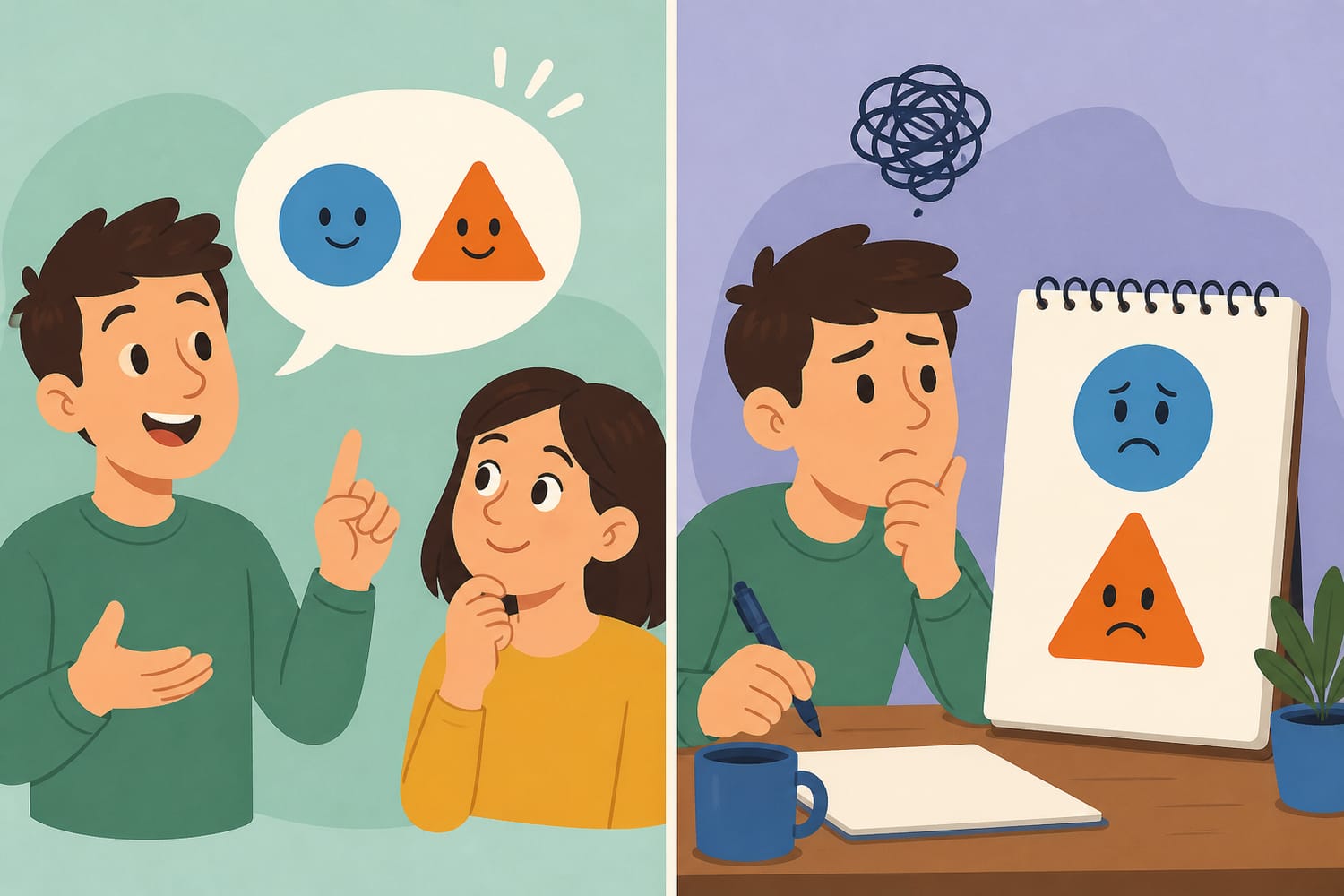
The Short Answer: Speech and Writing Have Different Habits
“There’s two problems” sounds natural to many English speakers because there’s is a familiar, easy way to start a sentence. But there’s usually means there is, and two problems is plural. In edited writing, “There are two problems” is the safer choice. The spoken version isn’t a mystery—or a reason to panic if you’ve said it today.
Imagine you’re explaining why the office printer has stopped working. “There’s two problems,” you say, before naming a paper jam and an empty ink cartridge. Nobody asks whether you meant one problem or two. Put the same sentence in a report, though, and that little ’s suddenly attracts attention.
Why does a sentence pass the conversation test but stumble on the page?
The Rule Hiding After “There”
In a sentence such as “There are two problems,” the word there doesn’t mean “in that place.” You aren’t pointing across the room at a pair of problems. You’re introducing the fact that the problems exist.
For standard subject–verb agreement, look at the noun phrase that follows the verb:
- There is one problem.
- There are two problems.
- There’s one problem.
The distinction is straightforward once you reach problem or problems. The trouble is that the verb comes before those words. A writer can stop, look ahead, and choose is or are. A speaker has to keep going while the sentence is still taking shape.
If you want a broader refresher, Uncover Words has a guide to subject–verb agreement without overthinking. For sentences beginning with there, the Government of Canada’s writing guide on verb agreement also explains why the noun after the verb matters.
Why “There’s” Gets There First
Picture someone opening the fridge: “There’s, uh, two containers of soup in here.” They may have started with the ready-to-go “there’s” before settling on two containers. In a conversation, they can finish the thought without rewinding and replacing the verb.
Even when the speaker knows exactly what comes next, there’s is a well-established conversational pattern. Cambridge Grammar notes that people use it before plural nouns in speech and some informal writing, while warning that the same use may be judged incorrect in formal writing or an exam. In other words, common in conversation and best for a polished document are different questions.
You might wonder why we don’t simply say “there’re two problems.” You may hear there are run together in quick speech, but there’re is not a usual choice on the page. For writing, the easy fix is to keep both words: “There are two problems.” The British Council’s guide to there is and there are teaches there are as the plural form and treats there’s as the short form of there is.
That leaves there’s doing a great deal of conversational work. It’s short, familiar, and useful when a sentence is being built in real time. None of that changes the number of problems with the printer. It just helps explain why the plural noun doesn’t always bring a plural verb along with it.
Why the Page Makes It Look Stranger
Spoken words disappear almost as soon as we hear them. We follow the speaker’s meaning, and by the time two problems arrives, we’re thinking about paper and ink—not examining the verb.
Writing gives the sentence a longer life. A reader can see there’s beside two problems, mentally expand the contraction to there is, and notice the mismatch. The apostrophe isn’t the problem by itself; “There’s one problem” is perfectly ordinary. The issue is what follows it.
Context also changes our expectations. A friend’s text—“There’s two slices of pizza left”—sounds casual. A restaurant sign saying the same thing might be edited to “There are two slices of pizza left.” One sentence isn’t easier to understand than the other, but the settings invite different levels of polish.
This is one reason your ear and your editing eye don’t always agree. Uncover Words explores that wider puzzle in why you can’t always trust your ear with English grammar. Here, your ear is picking up a familiar speech pattern; your eye is checking agreement in a finished sentence.
“There’s a Problem and Two Solutions” Is a Different Puzzle
Before you start changing every there’s followed by more than one thing, watch out for lists:
There’s a problem and two possible solutions.
The first noun phrase, a problem, is singular. With a list, a singular verb before a singular first item can be acceptable even though more items follow. Compare it with:
There are two possible solutions and a problem to consider.
Now the first noun phrase is plural, so are fits naturally. The Government of Canada’s writing guide notes that a verb introducing a list may agree with its first item. That doesn’t make “There’s two problems” the same case: two problems is one plural noun phrase, not a list beginning with a singular one.
If a list still makes you hesitate, rewrite it. “We have a problem and two possible solutions” is clear without asking is or are to handle an awkward introduction.
A Quick Fix Before You Hit Send
When you see there’s in something you’re editing, try this small check:
- Find what comes next. Is it one thing, an uncountable substance, or multiple things?
- Expand the contraction. Would there is fit comfortably in the sentence?
- If a plural noun phrase follows, use “there are.”
So “There’s a reason” works. “There’s plenty of time” also works because time is uncountable here. But in edited writing, “There’s several reasons” and “There’s plenty of reasons” are better as “There are several reasons” and “There are plenty of reasons.” The noun, not the mere idea of “a lot,” guides the choice.
You can sometimes improve the whole sentence instead:
There are two problems with the printer.
The printer has two problems.
The second version gets to the printer immediately. It won’t suit every sentence, but it’s handy when you’ve written a long string of there is and there are openings.
Do You Need to Correct It Every Time?
No. If someone says “There’s two problems,” the useful response is probably to hear what the problems are. The phrase is a familiar feature of informal speech, not evidence that the speaker cannot count. It can also be a deliberate choice in dialogue or a very casual message where preserving a natural voice matters.
If you’re writing an essay, instructions, a professional email, or anything likely to be carefully edited, choose “There are two problems.” It follows the standard agreement pattern and lets readers focus on your point rather than your apostrophe.
That’s the satisfying answer to this tiny grammatical standoff: your conversational ear isn’t broken, and your editing eye isn’t being fussy for no reason. They’re tuned to different situations. Let there’s keep its easygoing place in speech—and give there are the job when two problems need to appear in print.