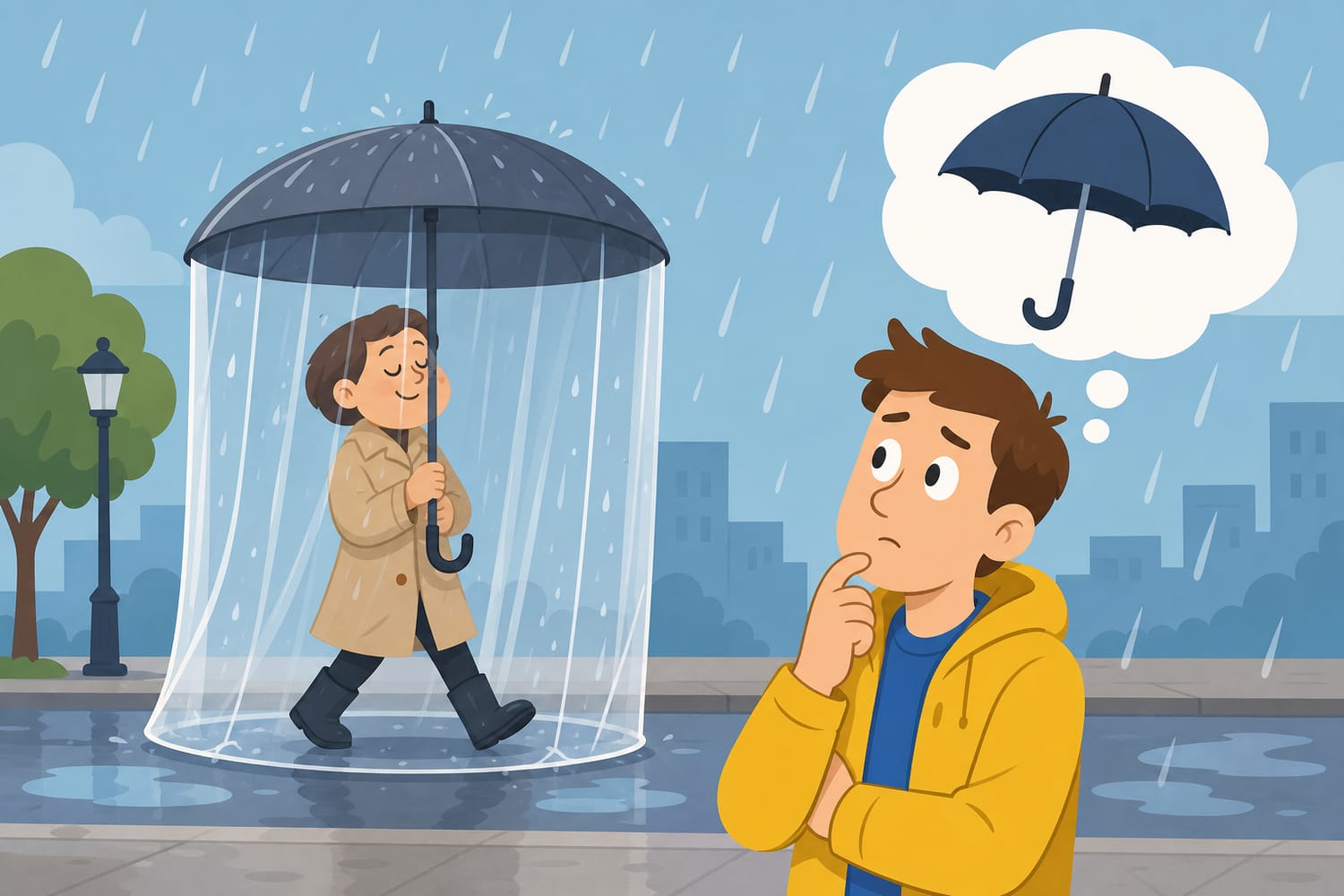
Meet the Bumbershoot: Your Rainy-Day Sidekick
A bumbershoot is an umbrella.
That’s it. No hidden trapdoor, no obscure medieval weapon, no whimsical species of marsh bird. If someone says, “Don’t forget your bumbershoot,” they mean, “It looks rainy—bring an umbrella.”
The word is pronounced roughly:
BUM-ber-shoot
It’s a funny, bouncy word, and that’s part of its charm. “Umbrella” is practical. “Bumbershoot” sounds like something a cartoon detective might carry while chasing a villain through a thunderstorm.
Today, bumbershoot is mostly considered an informal, humorous, chiefly American term. You probably won’t see it on a weather advisory, but you might hear it from a word-loving friend, spot it in a quirky article, or encounter it as the name of Seattle’s well-known arts and music festival, Bumbershoot.
So yes: a bumbershoot is an umbrella. But why on earth is it called that?
A Word That Sounds Older Than It Is
“Bumbershoot” has the vibe of an antique British expression, doesn’t it? It feels like something a mustachioed gentleman in a bowler hat might say while stepping into a foggy London street:
“Egad! Fetch my bumbershoot!”
But here’s the twist: bumbershoot is not especially old, and it is not originally British in the way many people assume. It is generally treated as an American slang or humorous word, with written evidence appearing in the late 19th century. Merriam-Webster dates its first known use to 1896.
That makes it much younger than “umbrella,” which has been around in English for centuries. “Bumbershoot” is more like a playful makeover of an existing word than a deeply rooted ancient term.
In other words, English already had “umbrella.” Then someone—or perhaps many someones—decided that “umbrella” needed to sound sillier.
And thus, somewhere in the linguistic rainstorm, “bumbershoot” opened up.
Where Did “Bumbershoot” Come From?
The exact origin of bumbershoot is a little cloudy, appropriately enough. Most dictionaries describe it as a fanciful alteration of “umbrella.”
That means the word likely began as a playful reshaping rather than a term with a precise technical origin. People have always enjoyed bending words for fun: adding sounds, swapping syllables, exaggerating endings, and creating comic versions of ordinary things.
The first part, bum-ber, seems to echo the rhythm of umbrella. Say them aloud:
- umbrella
- bumbershoot
They don’t look identical, but they have a similar rolling, three-beat feel.
The second part, -shoot, may have been influenced by words like parachute, since an umbrella and a parachute are both canopy-like objects that open overhead. That connection is often suggested, though the history is not perfectly certain.
So the safest explanation is:
Bumbershoot is a humorous American alteration of “umbrella,” possibly influenced by “parachute.”
Not as tidy as “this word comes from one Latin root and one Greek root,” perhaps—but that’s part of what makes it interesting. Some words are born in libraries. Others are born because people are goofing around.
Why “Umbrella” Was Already a Pretty Good Word
Before “bumbershoot” came along, English already had the much more serious-sounding umbrella. But “umbrella” has its own lovely history.
“Umbrella” comes from the Italian ombrella, related to ombra, meaning “shade” or “shadow.” That makes sense because umbrellas were originally associated not just with rain, but also with protection from the sun.
In fact, the word parasol means something similar in spirit. It comes through French and Italian roots meaning essentially “to shield from the sun.” Meanwhile, the French word for umbrella, parapluie, literally suggests protection against rain: para- meaning “against” and pluie meaning “rain.”
So the umbrella family tree is full of practical poetry:
- Umbrella: little shade
- Parasol: shield from sun
- Parapluie: shield from rain
- Bumbershoot: behold, the silly rain stick
Okay, that last one is not the literal etymology. But it captures the mood.
Is “Bumbershoot” Still Used Today?
Yes—but not very often in everyday conversation.
If you walk into a shop and ask where the bumbershoots are, the clerk may understand you, especially if they enjoy words. But they may also blink for a second before saying, “Oh! Umbrellas are over there.”
That’s because bumbershoot belongs to a category of words that are recognized more than they are used. It is a novelty word, a humorous synonym, the kind of term people pull out when they want to add personality to a sentence.
You might say:
“Looks like rain. Better grab your bumbershoot.”
Or:
“He arrived wearing galoshes, a yellow slicker, and carrying the largest bumbershoot I’ve ever seen.”
Or, if you’re feeling dramatic:
“Without my trusty bumbershoot, I was at the mercy of the storm.”
It’s not formal. It’s not technical. It’s not the word most meteorologists will use. But it is delightful.
The Seattle Connection: Bumbershoot the Festival
One reason the word has stayed visible in modern American culture is Bumbershoot, the arts and music festival in Seattle, Washington.
Founded in 1971, Bumbershoot became one of the best-known arts festivals in the United States. The name is a clever fit for Seattle, a city famous—fairly or unfairly—for cloudy skies and rainy weather. Calling a festival “Bumbershoot” suggests both local climate and broad cultural coverage: music, comedy, film, visual art, performance, and more all gathered under one big metaphorical umbrella.
It’s a perfect example of how a strange old-fashioned word can find a second life as a brand, title, or cultural symbol. Even people who have never used “bumbershoot” in a sentence may know it because of the festival.
Words survive in all sorts of ways: in books, jokes, family sayings, crossword puzzles, and, sometimes, music festivals.
Bumbershoot, Brolly, Gamp, and Other Umbrella Oddities
“Bumbershoot” isn’t the only unusual word for an umbrella. English has collected several colorful alternatives.
One of the most common is brolly, a British informal word for umbrella. It’s short, friendly, and still widely understood in the UK:
“Take your brolly—it’s going to pour.”
Then there’s gamp, an old-fashioned British term for a large umbrella. This one comes from Mrs. Gamp, a character in Charles Dickens’s novel Martin Chuzzlewit. Mrs. Gamp was associated with a bulky umbrella, and her name became attached to the object itself.
That’s one of the wonderful things about English: a fictional character can become an umbrella word.
Compared with “brolly” and “gamp,” bumbershoot feels especially comic. It’s longer, more exaggerated, and more American in flavor. If “brolly” is a quick dash through drizzle, “bumbershoot” is a grand entrance in a thunderstorm.
Why Do We Love Weird Words Like This?
Words like bumbershoot are enjoyable because they remind us that language is not just a tool. It’s also a playground.
Of course, we need plain, efficient words. If there’s a fire, nobody wants a poetic lecture. But in ordinary life, playful language adds texture. It turns a boring weather comment into a tiny performance.
Compare these two sentences:
“Bring an umbrella.”
Perfectly clear. Sensible. Responsible.
Now try:
“Bring your bumbershoot.”
Same meaning, but suddenly there’s personality. Maybe the speaker is cheerful. Maybe they’re trying to make a rainy day less gloomy. Maybe they just like weird words.
That is the magic of odd vocabulary. It doesn’t always change the meaning, but it changes the feeling.
How to Use “Bumbershoot” Without Sounding Too Strange
The key to using “bumbershoot” is to know your audience. It works best in lighthearted contexts, especially when the mood is playful.
Good places to use it:
- Casual conversation
- Funny writing
- Weather jokes
- Children’s stories
- Quirky captions
- Word games
- Blog posts about weird words—hello there
Less ideal places:
- Legal documents
- Emergency instructions
- Product safety manuals
- Very serious business emails
For example, this works:
“The forecast says rain all afternoon, so I’m packing snacks, boots, and my trusty bumbershoot.”
This might not:
“All employees are required to place wet bumbershoots in the designated receptacle.”
Actually, that one is still pretty good. But you get the idea.
A Tiny Word Lesson Hidden in the Rain
“Bumbershoot” may seem like just a silly synonym, but it reveals something important about English: words are shaped not only by necessity, but by imagination.
We invent serious words for science, law, medicine, and technology. But we also invent playful words because humans like rhythm, surprise, exaggeration, and sound. “Bumbershoot” is not more useful than “umbrella.” It does not describe a different object. It exists because language has room for joy.
And that’s worth celebrating.
The next time clouds gather and the sidewalk starts to shine with rain, you can reach for your umbrella like a normal person.
Or you can reach for your bumbershoot and make the weather just a little more entertaining.