The Short Answer
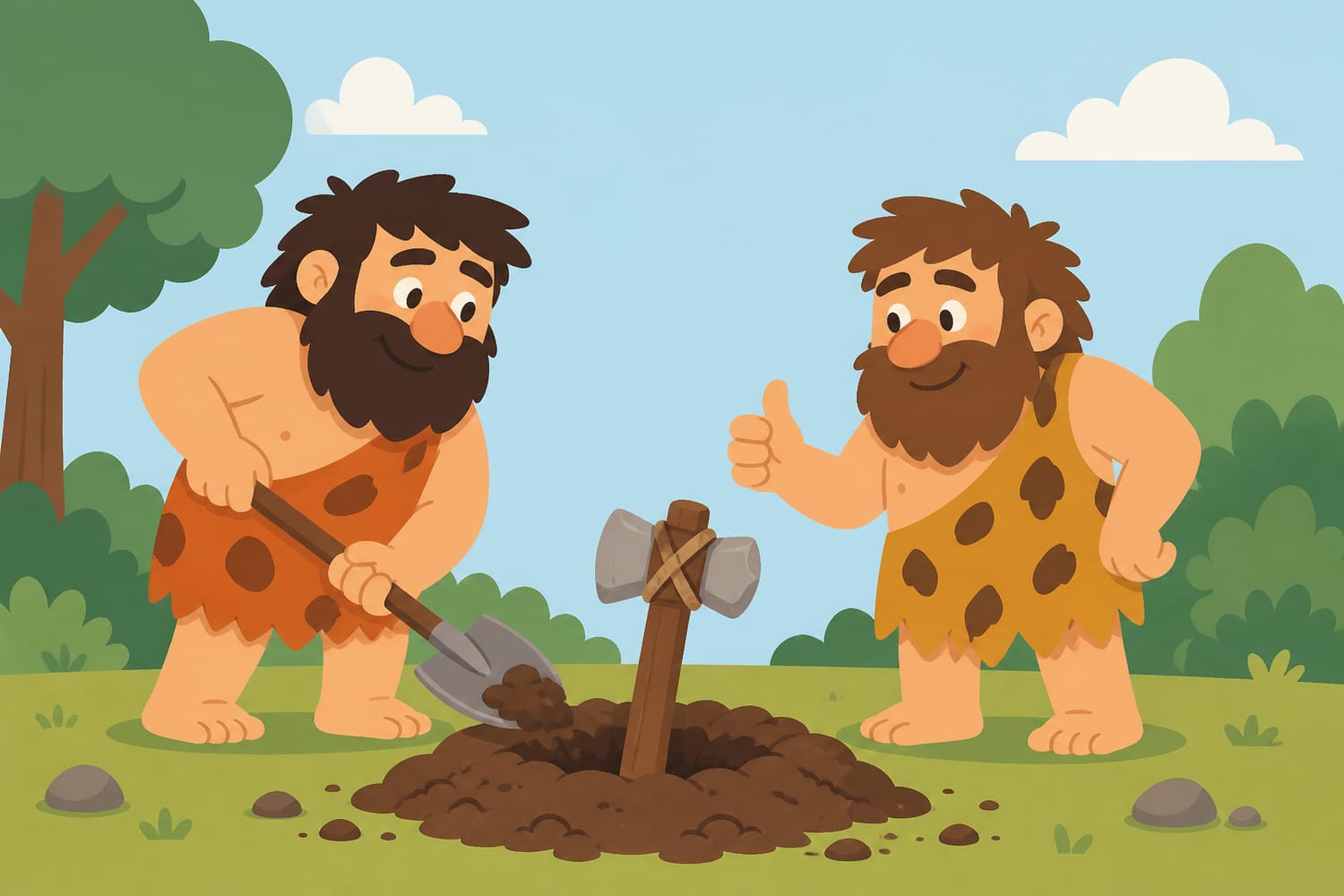
To “bury the hatchet” means to end a quarrel and make peace. The expression grew from Indigenous North American traditions in which weapons were symbolically put away—or, in some accounts, literally buried—to mark the end of hostilities. English speakers adopted that powerful image during the colonial era, and it eventually became an everyday idiom.
From Weapon to Symbol
A hatchet is a small, short-handled ax designed for one-handed use. It can split firewood, trim branches, and perform other practical tasks. Historically, however, axes and similar weapons could also represent warfare.
That makes the logic of the expression wonderfully direct. If raising a weapon signals conflict, putting it somewhere unreachable signals peace. No weapon, no fighting—at least in theory.
The imagery is similar to modern phrases such as “lay down your arms.” Nobody hearing that expression today expects two countries to place their weapons neatly on a picnic blanket. The action has become symbolic: fighting stops, weapons are set aside, and negotiation begins.
“Bury the hatchet” adds an extra layer of finality. The weapon is not merely lowered or placed on a shelf. It is covered with earth, removed from sight, and made difficult to retrieve. The message is clear: this conflict is supposed to stay finished.
The Indigenous Roots of the Expression
The phrase is commonly connected with peace traditions among Indigenous peoples of eastern North America, especially the Haudenosaunee Confederacy, historically called the Iroquois Confederacy.
It is important not to turn that history into a sweeping claim about every Indigenous nation. Native North America has always contained many distinct peoples, languages, governments, and customs. There was no single universal “Native American tradition” followed identically across the continent.
The Haudenosaunee tradition offers one of the clearest connections between buried weapons and peacemaking. The Confederacy originally united five nations: the Mohawk, Oneida, Onondaga, Cayuga, and Seneca. The Tuscarora later joined, creating what became known as the Six Nations.
According to the Great Law of Peace tradition, formerly warring nations placed their weapons beneath the roots of a white pine known as the Tree of Peace. The tree represented unity, protection, and a new political order based on cooperation rather than internal warfare.
The Oneida Indian Nation’s explanation of the Tree of Peace describes the weapons as being buried beneath the tree’s sacred roots, never to be used against one another again. The image is much richer than simply digging a hole for an ax. It represents replacing violence with law, unity, and shared responsibility.
In other words, the original idea was not merely, “Let’s stop arguing.” It was closer to, “Let’s create a lasting system in which we no longer need these weapons against each other.”
That is some serious weight for a phrase now used when two neighbors finally stop feuding over a hedge.
When Did It Enter English?
European colonists encountered Indigenous diplomatic traditions and recorded references to weapons being cast away, hidden, or buried as signs of peace.
Seventeenth-century records contain imagery involving the disposal of hatchets and other weapons. One account from 1680, written by Massachusetts diarist Samuel Sewall, described a peace agreement in which two axes were buried in the ground. Sewall understood the ceremony to be more meaningful and binding to the participants than written peace terms alone.
Exactly when the modern wording became fixed is less straightforward. Historical dictionaries sometimes give different dates because they use different collections of surviving texts and different standards for what counts as the phrase’s first appearance. Merriam-Webster lists the first known use of “bury the hatchet” as 1694.
That does not necessarily mean someone invented the expression in 1694. “First known use” means the earliest example currently identified in the records consulted by that dictionary. People may have spoken the words earlier without leaving a surviving written trace.
By the 18th century, the expression was appearing more widely in English-language writing. Over time, it moved beyond discussions of war and formal diplomacy. The buried weapon became a metaphor for ending arguments of every size, from political disputes to family squabbles.
English loves doing this. A vivid physical action becomes a useful mental picture, then settles into ordinary conversation. Similar transformations can be seen in expressions such as “bite the bullet” and “break the ice”.
Was It Really a Hatchet?
Not always—or at least not in the precise modern hardware-store sense.
Colonial writers often used English words such as hatchet, ax, and tomahawk when describing Indigenous tools or weapons. Those terms could overlap, and translations were not always exact. The object described in one historical account might not look exactly like what we now picture when someone says “hatchet.”
The English word hatchet itself is much older than the idiom. It entered Middle English from Old French and originally referred to a small ax. The word was already established centuries before English speakers in North America began using “bury the hatchet” to mean making peace.
There was also an older English expression, “hang up one’s hatchet,” meaning to stop an activity. This has occasionally led to debate over whether it influenced the later phrase. However, historical descriptions of Indigenous peacemaking and the strong cultural significance of buried weapons in Haudenosaunee tradition provide a clear North American context for the familiar expression.
The safest conclusion is that the idiom developed through colonial English encounters with genuine Indigenous peace symbolism, even though its exact path into everyday speech cannot be reconstructed word by word.
What Does “Bury the Hatchet” Mean Today?
Today, the expression means to end hostility, settle a disagreement, or become reconciled. It usually suggests that the people involved have been in conflict for some time.
For example:
- “After years of arguing over the family business, the sisters finally buried the hatchet.”
- “The two rival teams buried the hatchet and organized a charity match.”
- “Can we bury the hatchet and finish this project?”
- “They agreed to bury the hatchet, although they still weren’t exactly best friends.”
That last example points to an important detail: burying the hatchet does not always mean total forgiveness or instant friendship.
Two people can end open conflict without forgetting what happened. They may agree to cooperate, behave civilly, or stop retaliating while still needing time to rebuild trust. The phrase describes reconciliation, but it does not guarantee that every emotional wound has magically vanished.
A buried hatchet, after all, is still a hatchet. The hope is that nobody digs it up again.
Why the Phrase Has Survived
Some idioms survive because they sound amusing. Others last because they create a picture so clear that no explanation is needed. “Bury the hatchet” does both.
Its staying power comes from several features:
- It is visual. You can immediately imagine a weapon disappearing beneath the soil.
- It suggests deliberate action. Peace does not simply happen; someone chooses to put the weapon away.
- It implies finality. Burying something feels more permanent than setting it down.
- It works at almost any scale. The phrase can describe peace between nations or the end of an argument over whose turn it is to empty the dishwasher.
It also reflects a common feature of figurative language: physical actions help us describe abstract ideas. We “hold on” to resentment, “drop” an issue, “build” trust, and “repair” relationships. None of these things can literally be held, dropped, built, or repaired with a toolbox, but the metaphors make complicated emotions easier to understand.
That same love of memorable imagery explains why expressions such as “let the cat out of the bag” remain popular long after their original settings have faded from everyday life.
Can You Dig Up the Hatchet?
Unfortunately, yes—linguistically speaking.
English speakers sometimes say that someone has “dug up the hatchet” when an old dispute returns. This expression is far less established than “bury the hatchet,” but its meaning is obvious. Someone has revived an argument that was supposed to be over.
A related expression is “the hatchet is buried,” meaning peace has been achieved. You may also hear “smoke the peace pipe,” although that phrase compresses diverse Indigenous ceremonial practices into a stereotype and can feel outdated or culturally careless. “Make peace,” “reconcile,” and “resolve the dispute” are straightforward alternatives when the historical imagery is unnecessary.
More Than Just a Quirky Saying
“Bury the hatchet” may sound like another odd English expression, but its background points to something deeper. Its central image is tied to Indigenous traditions in which putting away weapons represented not only the end of violence but the beginning of a peaceful relationship.
Over the centuries, English speakers broadened the expression until it could cover almost any reconciliation. The battlefield became the boardroom, the council meeting became the group chat, and the hatchet became whatever grudge people refused to release.
So, the next time someone suggests burying the hatchet, there is no need to fetch a shovel. They are asking for something more difficult—and more valuable: a conscious decision to stop fighting and move forward.